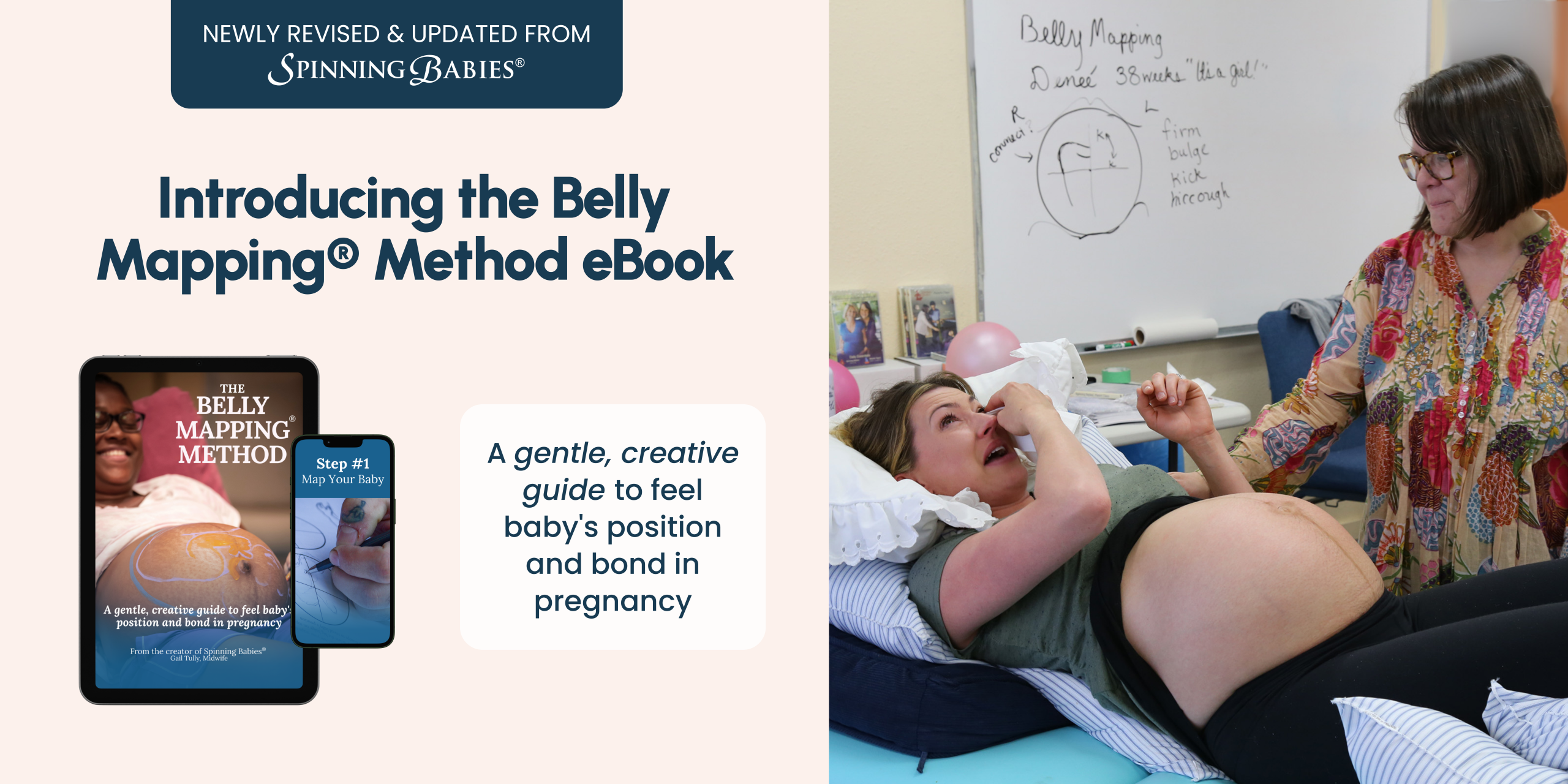
We’re thrilled to share the release of The Belly Mapping® Method book: a joyful new resource from Spinning Babies® founder Gail Tully.
For two decades, Gail has practiced and taught The Belly Mapping® Method, a gentle, hands-on way for parents to understand their baby’s position in the womb. Tested and proven accurate when compared with ultrasound, this method has helped countless families feel more confident and connected during pregnancy. Now, Gail’s wisdom and playful practices are gathered into one beautifully illustrated book that families can enjoy together.
Why The Belly Mapping® Method Matters
The position of your baby in late pregnancy plays a big role in labor and birth. When a baby’s head is well-flexed and the body is curled, labor often progresses more smoothly. And if baby is in a less-than-ideal position, parents and providers can work together to create more comfort and alignment. The Belly Mapping® Method gives you a gentle, empowering way to notice your baby’s position, bond with them, and take an active role in preparing for birth.
What You’ll Learn in the Book
Inside The Belly Mapping® Method book, you’ll find:
- Step-by-step guidance for gently feeling and identifying your baby’s position
- Fun, creative bonding activities you can share with a partner, older children, or loved ones
- Beautiful illustrations that make learning approachable and engaging
- Insights into how your baby’s position can influence labor and birth
- Encouragement to celebrate your baby’s progress, and seek gentle support if needed
Walk Away With Confidence and Connection
Readers will walk away with a deeper awareness of their baby, more confidence as birth approaches, and playful ways to enjoy pregnancy. Whether your baby is already in a great position or needs a little more room to turn, this book offers simple tools to help you connect, prepare, and relax as your journey unfolds. For deeper learning and personalized support learning the Belly Mapping® Method, connect with a Spinning Babies® Certified Parent Educator.
The Belly Mapping® Method book is more than a guide: it’s an invitation to celebrate pregnancy, nurture connection, and bring joy and ease to birth preparation.
Try Belly Painting at Home
If reading The Belly Mapping® Method book has inspired you to try belly painting at home, here are some materials you may enjoy using:
You can choose water-soluble crayons, non-toxic markers, or high-quality, non-toxic face paints. Be mindful that some inexpensive pigments may contain lead or other heavy metals not listed on packaging, so always check for safety before use.