Resolving Shoulder Dystocia

FlipFOLP for shoulder dystociaResolving Shoulder Dystocia in the Active, Mobile Woman

Gail Tully, CPM, became interested in communicating to other midwives and to doctors about Shoulder Dystocia after observing a higher incidence following the labors in which OP babies rotated to OA before emerging. (Incidence is actually less likely in babies who emerge OP.) **Scroll down for class information.

Gail developed a memory tool called FlipFLOP to help birth attendants free the stuck shoulders will little chance of birth injury. Non-drugged birthing women have more options to put their pelvis to work to free the shoulders from the pelvis. It would be helpful for women birth attendants to learn techniques that give them the leverage to rotate the baby's shoulders free. Here is how to do it.

 While there are many ways to help the shoulders out if the head is born and the shoulders are stuck, rotation and nutation are the twin stars of success. Dr. Wood's introduced rotation and Dr. Ruben noted that if you rotate the shoulder towards the chest you could use less force while making the baby be in the smallest diameter (seem smaller). Dr McRoberts' introduced nutating the pubic bone. Dr. Sarah Poggi emphasizes the benefits of bringing the posterior arm out of the pelvis before much time passes.

A traditional method is getting modern attention. That method is now known as the Gaskin Manuever. Ina May Gaskin, world renown midwife, popularized the simple method of helping a woman to flip over onto her hands and knees. The movement of rotating the mother often frees the shoulders.

Gail Tully, the midwife who hostesses this Spinning Babies Website, follows the Gaskin's Maneuver with 3 other techniques when still needed.  Together, she calls these four techniques FlipFLOP to make it easy to remember:  Flip the mom over (this is the Gaskin Manuever); Lift her leg; rotate the shoulder to the Oblique; and bring out the Posterior arm. Email her to get a pdf. file with the FlipFLOP memory hint.  Or, click here to Download the single page FlipFLOP pdf file (1.19 mb)


How to use FlipFLOP 

First, move the mother to move the baby.

Running Start in two views with rotation towards chest

Flip the mom on to her hands and knees. This can be done quickly and even on a hospital bed that is "broken." The rotation of the movement may dislodge the shoulder(s). 

After the mother has flipped over using Gaskin's Maneuver onto her Hands and Knees position most babies will be born spontaneously. However, if the baby isn't born immediately, the midwife or her assistant directs the next move as the next contraction begins or before.

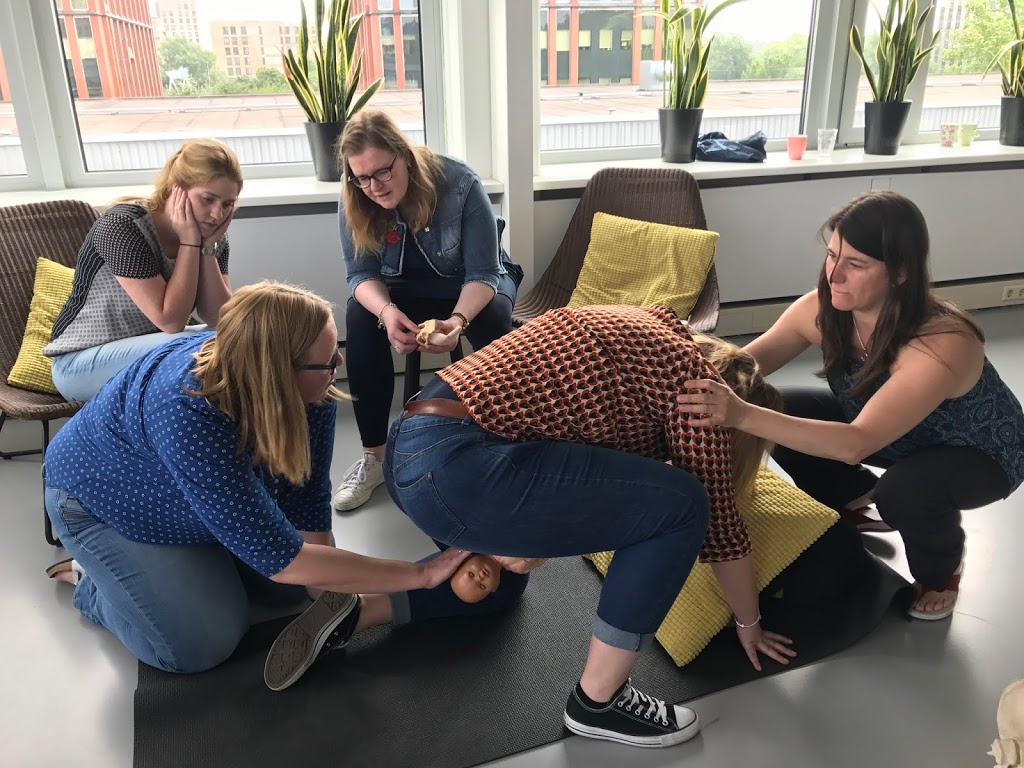
Lift the leg to the "Running Start" position. With the midwife's direction (and the touch of her assistant) the mother lifts one leg and sets her foot flat on the mattress or floor where she is birthing. Her knee is up near her ribs, near her arm pit and her foot is flat, not up on her toes. Please notice the positioning of the leg, so that the knee isn't away from her body.

Running Start rolls the baby's anterior shoulder ioff the pubic bone as the movement twists (nutates) one half of the symphysis pubis. The pubis shifts from the movement of putting the leg into the "Running Start" position (knee to arm pit). It is like half the McRoberts' manuever, which is done with the mother on her back. Half the pubic bone is rolled as the leg is lifted. Another set of babies will be born spontaneously with the addition of "Running Start" to the Hands and Knees position. If the mother gave birth to the baby's head while already on her Hands and Knees, she moves directly into "Running Start" without flipping over. If the arm can not be rotated (due to fists being locked into each inner elbow crook, then flip the mom into McRoberts position. But moving on to the next maneuver is faster.

Rotate the arm into the Oblique diameter. If the baby doesn't come right out with the contraction after assuming "Running Start," the midwife slips her hand into the mother, starting near her thigh, until she finds the back of baby's posterior shoulder. (The mother at this point is in hands and knees position.) She rotates the posterior shoulder towards the baby's chest into the oblique diameter of the mother's pelvis. There is the most room in the oblique diameter of the pelvis. Another set of babies will birth readily from rotating the posterior shoulder into the oblique diameter. [The repetition is intentional.]

If the baby fills up the mother's pelvis so much that the baby doesn't come right out with the shoulder rotation to the oblique diameter, than the midwife will continue efforts.

Bring out the Posterior arm. This is done best if the midwife splints the posterior humerus (upper arm bone) with her index and middle finger and sweeps the arm towards the baby's chest. Now she reaches her index finger into the bend of the inner elbow. This will flex the arm, meaning it will make the arm bend. Now the midwife can grasp the baby's wrist and work the hand up to the light of day (or lamp of night). Then the whole arm can be wiggled out carefully. This reduces the diameter of the baby's body by 2 cm. If that isn't enough, the baby is rotated 180 degrees so that the previously anterior arm is now posterior and that arm is brought out. Now the mom can push and the baby will come out.

FlipFLOP works probably 80-90% of the time. Try it and let me know. But notice the lie of the shoulders, too, and report both. Rotation usually works before you have to bring out the arm.

PAC Pull for shoulder dystocia when baby's shoulders are transverse


There are a few situations that McRoberts or the PAC Pull are better for -  

Rarely, the baby is too big and the mother's pelvis too small for the attendant to reach inside to bring the posterior arm out. The midwife can use PAC Pull. Posterior Axillary Crease Pull, here's how its done:  Brace the first two fingers behind the posterior axillary crease and, while rotating, pull the baby around and out. As long as the baby isn't overlapping the pubic bone, you can pull in this way, and this way only,  without fear of brachial plexus injury. Pulling from the front of the baby's arm pits is dangerous and could harm the nerves to the arm(s). Never pull without rotation. And its better to rotate rather than pull. Slow down and pay attention to the steps of freeing the shoulders before you begin yanking! Make sure the baby's anterior shoulder is free of the pubic bone before asking the mother to push or before pulling yourself. 


McRoberts is handy for women who birth on their back AND whose baby's shoulder or shoulders are stuck in the front to back (AP) diameter. Its useless for babies stuck in the transverse diameter. FlipFLOP can work for most babies in either diameter, but if the anterior shoulder is locked in the front of an android pelvis, using McRoberts with suprapubic pressure will be just the ticket. Nurses and apprentices need to find the correct way to do McRoberts, opening the knees away from the mother's rib cage is NOT McRoberts and misses the point.

Anne Frye


  • Please read Anne Frye's Holistic Midwifery Volume II for a thorough description of Shoulder Dystocia. You can also find reference to FlipFLOP and other comments I've made - how cool is that?!
  • Order her groundbreaking text at www.midwiferybooks.com/


There are far more details in resolving shoulder dystocia than are listed here, of course. Gail does not promote unassisted homebirth because of the risks when an unexpected emergency arises. Sometimes what a midwife can do simply can save a life that would be lost if a trained person were not at the birth. Seeing several births is not the same as being taught from your teacher or preceptor (and having them to step in) while having a hand in to get a stuck baby. Stuck shoulders are really stuck! Precise and determined action is needed and needed immediately.

We can trust birth when communication within the birthing team is open and honest. We can trust birth when we listen to the signals that tell us what is needed at any given, particular, birth. Our response-ability is in responding to those signals appropriately, without loosing clarity by wishing the signals were something different. As in, "I wish I didn't see the chin sucking back into the mother's flank... Maybe the baby will come out anyway..."


Dr. Carol Phillips, DC, relaxes the round ligament of a pregnant woman with the Webster TechniqueOne possible prevention of shoulder dystocia may be to overcome tension and restrictions in the pelvic ligaments and joints.

Sitting in school desks for 12 years, sitting for toileting instead of squatting, and sitting in bucket seats to drive and ride in the car each can have effects on the pelvis and so therefore in birthing.

Gail suspects that when a baby was OP in active labor and the head rotates to face the mother's back, but the shoulders don't rotate all the way around with the head, that the shoulders have a chance at becoming stuck. This is not saying that all, or even many, of babies that rotate out of the Occiput Posterior experience stuck shoulders, but there may be a correlation.

Inducing labor to prevent the baby having time to grow big is not statistically found to reduce the incidence of shoulder dystocia. That may be because the powerful effect of Pitocin, the artificial hormone to make strong uterine contractions to induce labor, moves the baby down fast enough that a few of these babies, though smaller, don't have time to rotate their shoulders for birth. Meanwhile, inducing to force the birth before baby finishes growing is a common occurrence.

Moving the mother as the head is crowning may also interfere with proper shoulder rotation. This occurs when a mother is crowning while on the toilet and she is encouraged to move back to the bed, or when the mother is crowning on a birthing stool and she is offered and helped into the birthing tub, or some such move as that. Interference, whether by people who want to help the mother or help themselves, can interfere with the baby's own efforts to birth smoothly through the pelvis.

Laying down on the back to push a baby out, pushing before the urge to push, and the use of a vacuum or forceps during birth might be associated with a shoulder dystocia. Cesarean delivery is associated with a 4-9 times higher death rate for mothers. Yet, sometimes interventions to help overcome slight problems from lifelong habits are necessary. We all do the best we can with what we know at the time.

I support a diet with more live foods, meat with fat, and organic if possible, salt, seaweed, dark leafy greens, yellow veggies, and skip the breads and noodles. Have whole grains, such as brown rice and oatmeal, quinoa, and millet, fava beans and the like. Avoid sugar and regular use of milk, cheese, peanut butter and processed foods. Move. Move your body more. Yoga stretching and walking. Body work and upright positions in labor. Relaxing the broad and round ligaments and helping baby into an optimal position in the 7th and 8th months so the arms can get settled in front of the chest before labor starts. Using a pregnancy belt in labor for women with a pendulous uterus and wearing it during pushing until the baby is out! These, to me, are ways to avoid shoulder dystocia. 

A chart of methods to resolve shoulder dystocia.

Which one you pick may depend on just how the shoulders are positioned inside the mother's pelvis. Some methods are more risky than others. I have a chart of maneuvers to go with my upcoming book, Resolving Shoulder Dystocia. It won't make sense to those who haven't studied shoulder dystocia in the literature. Readers of Anne Frye's book will have the most ease with the terms used in it, but not completely. I offer it here for those who are intently studying this topic. Realize this chart will be more complete when used with the upcoming book. Click here to Download the Shoulder Dystocia Maneuvers Chart. (56 kb)  

The Resolving Shoulder Dystocia class

Set up for Resolving Shoulder Dystocia in Duluth, MNI've developed a Resolving Shoulder Dystocia class to give you a step by step understanding of

  • How the shoulders lie in the pelvis when stuck
  • Normal shoulder rotation to judge stuck shoulders by
  • Reliable solutions to use with each type of shoulder dystocia
  • You will know when to use which technique and how to use them safely


3 MEAC CEUs

Slide show with photos and film clips

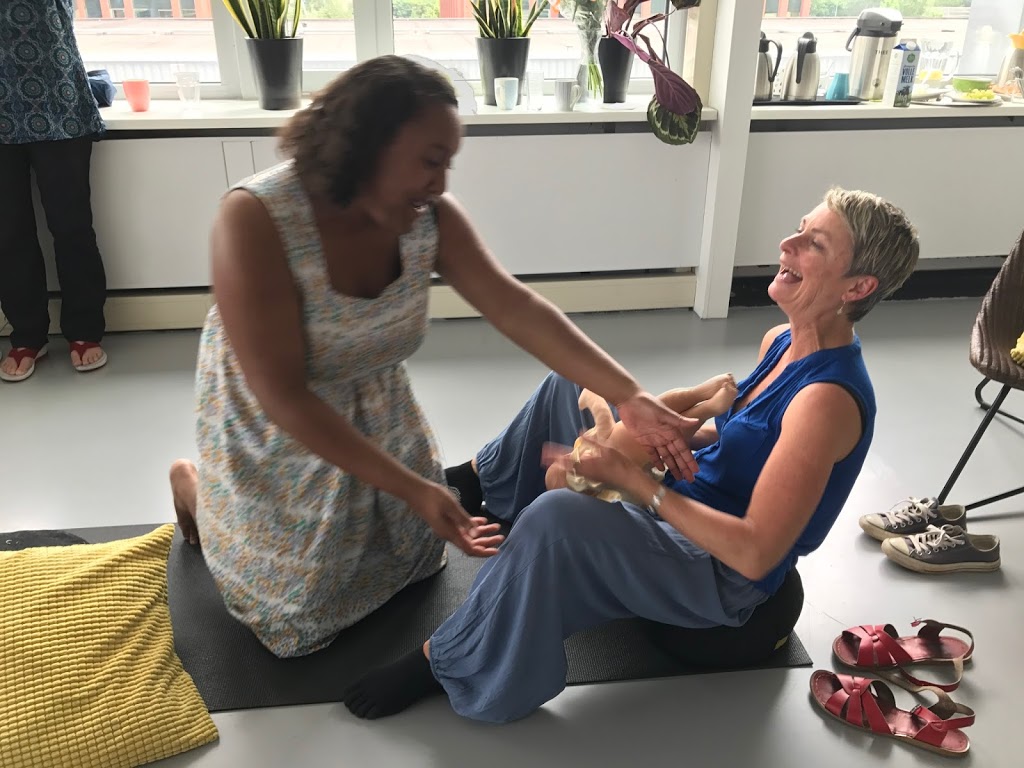
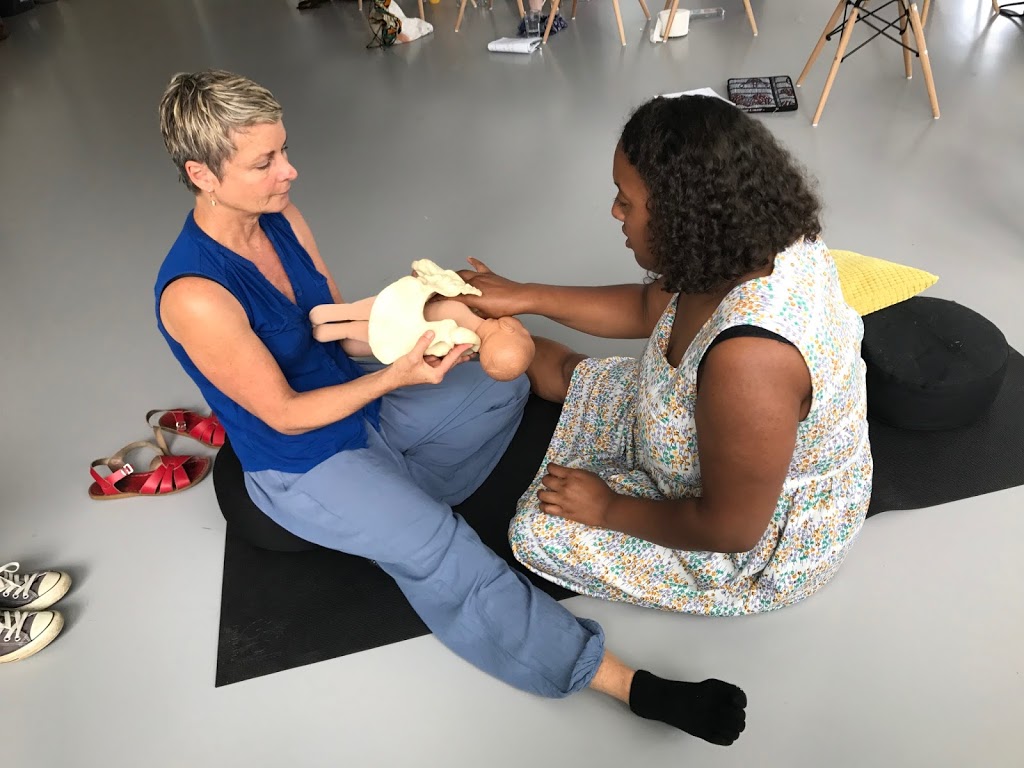
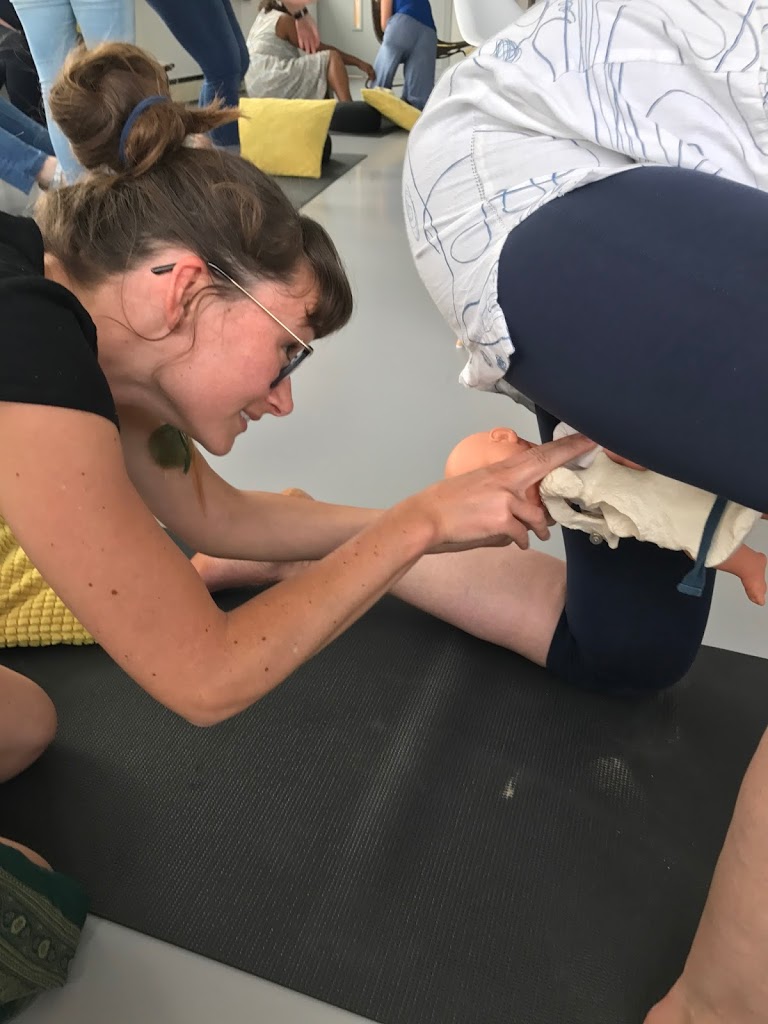
Hands on practice with a specially fitted manikin and a doll

Decent handouts to study from

$50. for midwives, physicians and L & D nurses.

Bring your apprentice and she can get in for $25.

Please, no parents or doulas, darlings, you need to be catching to come... and yes, I know the L & D nurses don't intend to, but sometimes have to!

Practice with her to improve communication and charting during a shoulder dystocia


Bring out the posterior arm!  in TexasGail is giving a few workshops to prepare for her morning pre-conference at MANA this October 14, 2010.

The workshops are 

Sept. 8, 2010 St. Louis Park, MorningStar Birth Center 1-4 pm

Sept. 19, 2010 Sunday afternoon, Baltimore suburb, location to be announced

Sept. 22, 2010 Wednesday afternoon or evening, Norfolk, Virginia

I may do a small Mpls/St. Paul class for filming purposes... want to help?

Oct. 14, MANA pre-conference, Nashville, MN 

Oct. 30, Shell Lake, WI at Life Circle Birth Center


Gail Tully in New Jersey with Vicki Hedley Resolving Shoulder Dystocia


McRoberts with Suprapubic at the Resolving Shoulder Dystocia workshopFlipFLOP from Gaskins to going for the posterior arm, Resolving Shoulder Dystocia Vicki Hedley's class with Gail Tully

"I absolutely don't fear shoulder dystocia anymore. There's a respect there, but not a fear." -Maureen Dahl, CPM, after resolving a double inlet dystocia using class techniques.

Maureen Dahl gives me a hands while I prepare my visual aids.

Maureen gives me a hand as I prepare for class.

Maureen continues, "Before the class, I had a system, but there was still some anxiety. But after being trained by you there is no anxiety. There's a take-action response, a proactive approach with what I've learned. 

"That last one was a true shoulder dystocia. This was a double inlet dystocia [both shoulders stuck at the brim]. That one was going to end in tragedy. She'd had  unassisted births and was pushing the baby out before I got there. She was in the tub as I walked in. She said, 'There's something wrong, there's something wrong. The baby's not coming.' I asked her to get out of her tub, I hated to, but I had to. 

"I got her in an exaggerated McRoberts' to get the head to come down. It was coming very slow and then, Arghh! [Turtle sign: The shoulders pull the emerged head back in a bit so that the baby looks like a turtle retracting the head.]

"I got her immediately into Gaskins' and immediately into Running Start. Then I tried [to rotate the posterior shoulder to the oblique diameter but couldn't get it to budge] I found the back with my right hand. It was extremely way up there. Maureen practices FlipFLOP with modelsI put my whole hand in, past the wrist, and tried to compress the shoulder forward [Maureen is describing in her own words how she tried Rubin's rotation] Then I backed off because I had an urge to hook the armpit with my finger and knew not to do that.

"I tried the PAC Pull but, no.  So, I put my left hand inside and went for the anterior shoulder. It was way up there, I lifted the shoulder [pushed the shoulder higher up back into the pelvis with her finger tips] and then g0t behind it and pushed it forward [in Rubins] to the oblique. Then they were freed from the impingement. 

"Then, I had her push." [Mothers don't push until the shoulders are free so they don't push the shoulders on to the bones they are stuck on.] The baby was ten pounds and Apgars were 9 at one minute and 10 at five minutes. 


Get the Flash Player to see this player.
Image rotator by Isonomy.

Whats all here?

Register and Login


Your kindness matters!


Information about fetal positioning is given freely throughout the many articles of the Spinning Babies Website. Perhaps this information made a difference in your birth. Perhaps you refer the families you work with to Spinning Babies. Please donate if and when you can. Each occasional donation is a big boost!

Websites by Simplweb