Birth preparation may matter for more than just the labor and birth experience. Research involving 3,080 mothers found that those who described their birth experiences more positively were more likely to breastfeed and to continue breastfeeding longer.2 The study does not show that a positive birth experience directly causes breastfeeding success, but it points to an important connection between how birth is experienced and what comes next.
That connection is one reason to take a wider view of birth preparation. Learning about labor, physiology, common decisions, postpartum recovery, and most importantly developing a connection to self and baby can help parents enter birth feeling more informed and confident. Antenatal education can support improvements in childbirth self-efficacy and reductions in fear.6
For parents who hope to breastfeed thinking ahead to those first hours, skin-to-skin contact, early feeding, lactation care, and how you want to be included in decisions can help bridge pregnancy, birth, and the postpartum period.
It’s great to allow that learning to happen gradually throughout pregnancy. Our free Spinning Babies® Pregnancy: Week by Week emails offer trusted guidance to help you understand your changing body, your baby’s development, and ways to prepare as the weeks unfold.
What Makes a Birth Experience Feel Positive?
A positive birth experience is not defined by one type of birth.
The World Health Organization recommendations for a positive childbirth experience, emphasizes respectful, individualized care, clear communication, emotional care, and meaningful involvement in decision-making.1
A vaginal birth is not automatically positive, just as an induction, epidural, assisted birth, or surgical birth is not automatically negative. Whatever birth requires, parents should still feel informed, respected, and included in decisions about their care.
Birth preparation can help create a foundation for that involvement. Understanding some of the possibilities that may arise during labor, and having nurtured that connection to self and baby, can make it easier to follow your intuition, ask questions, communicate preferences, and stay engaged in decisions even when circumstances change.
Birth, Postpartum, and Breastfeeding Are Part of the Same Transition
It is possible to spend months preparing for birth and very little time thinking about what happens immediately afterward.
Spinning Babies® Certified Parent Educator, birth doula, childbirth educator, and breastfeeding counselor Amara Cashion has seen parents prepare carefully for labor only to realize that they have given much less thought to postpartum recovery or feeding. Learning about those early days and creating a vision for what that can look like before baby arrives can make the transition feel less unfamiliar.
Rhonda McGregor, a Registered Nurse, International Board Certified Lactation Consultant, Spinning Babies® Certified Parent Educator, and Certified Birth Professional sees pregnancy, labor, birth, and lactation as a continuous physiological process.
“Physiology doesn’t stop at birth. It’s just the continuation of the story, a different chapter.”
For parents who hope to breastfeed, that next chapter begins during a significant physical and hormonal transition. After birth, hormonal changes help the body begin establishing milk production. Suckling and milk removal are part of that process, while closeness with baby can encourage both feeding and connection.
Skin-to-Skin, Hormones, and Early Feeding
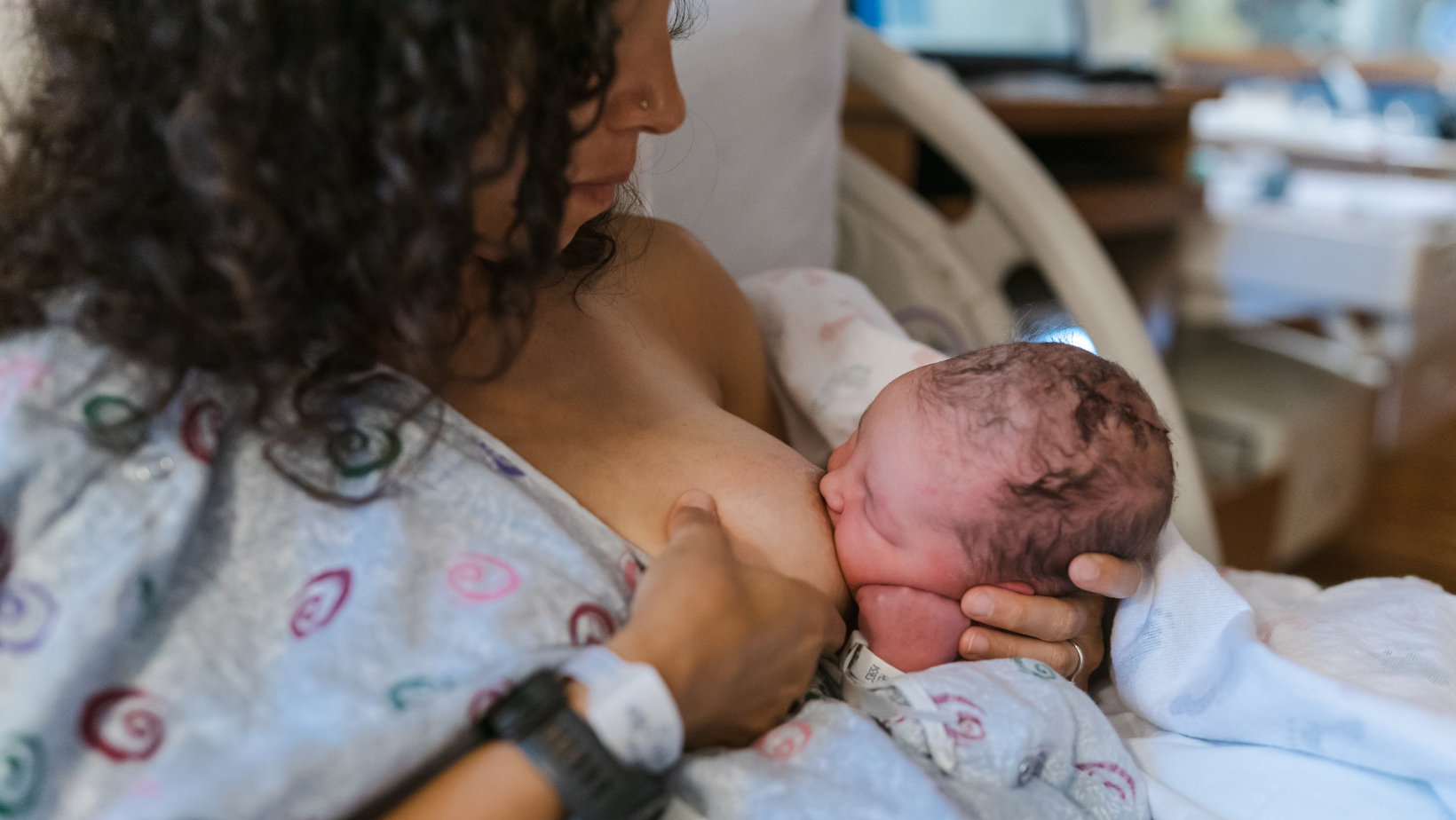
When it is safe and possible, early skin-to-skin contact gives parent and baby time to settle together. The World Health Organization recommends supporting uninterrupted skin-to-skin contact after birth and helping parents who wish to breastfeed begin as soon as possible. Evidence reviewed by WHO also links early skin-to-skin contact with breastfeeding initiation and longer breastfeeding duration.3
These early moments also help lay the foundation for attachment, regulation, and the transition into parenthood, making the process of becoming human feel more supported and connected.
Newborns bring their own instincts to these first interactions, though the way those early behaviors unfold can be influenced by the circumstances of birth and the immediate postpartum period. Feeding cues and reflexive behaviors can help babies seek closeness and begin feeding, although the process will not look exactly the same for every baby.
Preparing Your Body, Baby, and Support System for Birth
At Spinning Babies®, birth preparation includes learning about the relationship between your body and your baby.
Baby is an active participant in birth, moving and rotating through the pelvis during labor. Activities such as Belly Mapping™ can help parents notice where baby may be and become more aware of baby’s movements and position throughout pregnancy.
Amara highlights the importance of birth preparation and building connection:
“You’re meeting your baby for the first time, but your baby’s not a stranger to you at birth.”
The Spinning Babies® Three Principles: Balance, Gravity, and Movement℠ offer a framework for understanding how body balance, movement, and awareness can be part of preparing for physiological birth. Parents who want a daily routine to support body balancing can explore the Spinning Babies® Daily Essentials Video.
Both Amara and Rhonda note how overwhelming pregnancy information has become. Advice is everywhere, and not everything that appears in a social media feed applies to your pregnancy or comes from a qualified source.
“Rather than trying to consume everything, choose a few resources you trust. Bring questions to your midwife, physician, doula, childbirth educator, or other qualified members of your care team”.
You do not need to know everything and certain perspectives may resonate more than others. Choose what feels right for you. An understanding of the basics can make it easier to participate in your care and ask questions when you need to, but you decide what that look like for you.
Preparing for Breastfeeding Before Baby Arrives
Preparing for breastfeeding can begin before labor, even if you do not yet know exactly what feeding will look like for you and your baby.
A systematic review of 14 studies found that prenatal breastfeeding education may help parents feel more knowledgeable and confident about breastfeeding and may increase breastfeeding initiation.4 Education cannot prevent every challenge, but learning ahead of time can make it easier to recognize what feels okay to you and when additional guidance may be useful.
Consider learning about newborn feeding cues and what feeding may look like during the first hours and days. Ask what lactation care is available at your planned birth location and how to reach a qualified lactation professional once you go home. You can also talk with your care team about preferences for skin-to-skin contact, keeping baby nearby, and feeding assistance when medically appropriate.
Partners and other support people can be part of these conversations, too. They can remember questions when you are tired, keep food and water nearby for you, help you get into comfortable feeding positions, or simply give you the encouragement and reassurance
Some families may also be advised to learn about antenatal hand expression or colostrum collection. This is not routinely recommended for every pregnancy, so it is something to discuss with your maternity or lactation care provider based on your individual circumstances. More Milk Sooner has a wealth of free resources to help guide your conversations.
It can also help to know ahead of time where you will turn if breastfeeding hurts, you are concerned about milk supply, baby is struggling to feed, or you simply feel unsure. Reaching out for help can be part of the plan.
When Birth or Breastfeeding Unfolds Differently Than Expected
Even with thoughtful preparation, birth and feeding may unfold differently than expected.
A parent may have a surgical birth. Baby may arrive prematurely, need NICU care, or require medical attention before skin-to-skin can happen. Parent and baby may be separated. Breastfeeding may be painful or difficult. Milk supply, latch, recovery, medication, mental health, or other circumstances may change the feeding plan.
When that happens, families need practical guidance and compassionate care rather than judgment about how birth or feeding was “supposed” to go.
Missing immediate skin-to-skin does not mean the opportunity for connection has passed. Skin-to-skin contact can happen later and continue in the days and weeks after birth. When parent and baby are temporarily separated, a lactation professional or care team can offer guidance about hand expression or pumping if breastfeeding or providing breast milk remains the goal. WHO specifically recommends teaching milk expression as one way to help maintain lactation during temporary separation.3
Rhonda also points out that a birth can look straightforward from the outside and still feel frightening or traumatic to the person who experienced it. A 2025 systematic review found that traumatic childbirth and birth-related post-traumatic stress symptoms were consistently associated with poorer breastfeeding outcomes, including initiation, duration, breastfeeding confidence, and exclusive breastfeeding.5 For some families, emotional or mental-health care may matter just as much as practical feeding guidance.
Breastfeeding is also not the measure of the bond between parent and baby. Parents who cannot or choose not to breastfeed can still hold baby skin-to-skin, cuddle baby close during bottle feeds, respond to cues, make eye contact, offer comfort, and build a deeply connected relationship.
Pumping, expressed milk, donor milk when available and appropriate, combination feeding, or formula may all become part of an individual family’s story.
Feeding plans can change. So can feelings about them.
Preparation should give parents more options, not another standard they feel they have failed to meet.
Continue Your Birth Preparation
The right next step depends on where you are in pregnancy, how you prefer to learn, and the resources available to you.
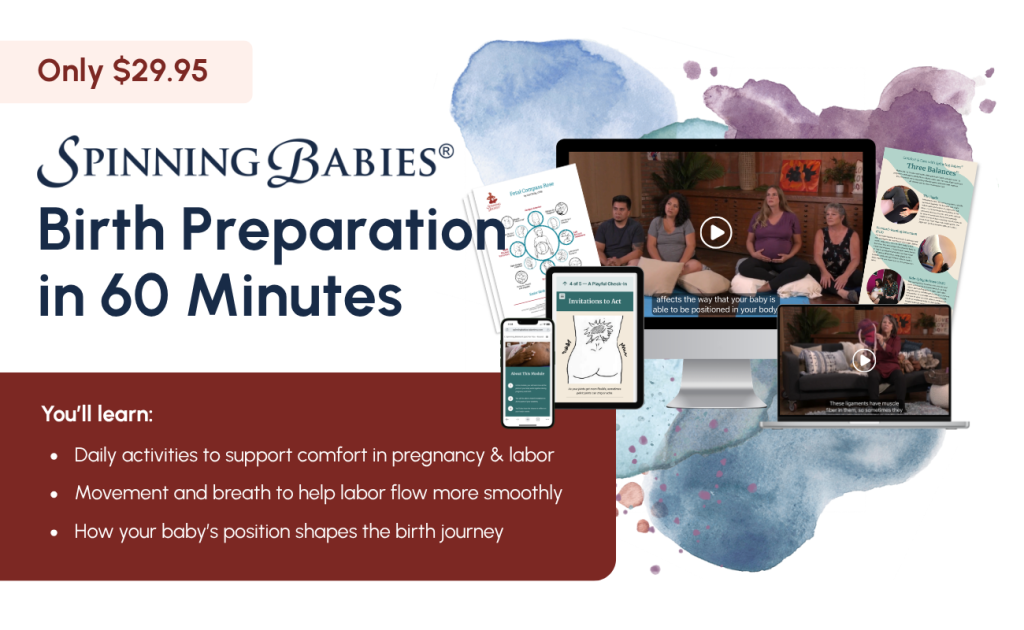
If you want a self-paced introduction to the Spinning Babies® approach, the Spinning Babies® Birth Preparation in 60 Minutes Online Course for Parents offers body-centered education from Spinning Babies® founder Gail Tully.
Parents who prefer learning in an in-person setting can find a Spinning Babies® Certified Parent Educator and explore a Spinning Babies® Birth Preparation Class.
For guidance that follows you throughout pregnancy, Pregnancy: Week by Week offers free information about your changing body, baby’s development, and preparing for birth as your pregnancy progresses.
For birth professionals who want to help families prepare with a deeper understanding of physiology, fetal positioning, balance, and connection, learn more about Spinning Babies® Certified Parent Educator Training and the pathway to teaching Spinning Babies® Birth Preparation Classes.
Preparation Creates Support, Not Certainty
Birth preparation cannot guarantee a positive birth or a particular breastfeeding outcome. But research does suggest that the way birth is experienced and how breastfeeding unfolds afterward are connected.2
Preparing with trusted information, questions, resources, and an understanding of the early postpartum period can help you enter birth with greater confidence and know where to turn when you need help.
Plans may change. Birth may surprise you. Feeding may look different than you expected. Good preparation leaves room for all of that while helping you feel informed, cared for, and supported as you find the path that works for you and your baby.
References
We cite academic research to provide background context for our readers. Citing specific findings does not constitute an endorsement of the entire study, its methodology, or its authors. Science and clinical understanding continuously evolve, and referenced materials reflect the context of their publication date.
- World Health Organization. WHO recommendations: intrapartum care for a positive childbirth experience. 2018.
- Davis AMB, Sclafani V. Birth Experiences, Breastfeeding, and the Mother-Child Relationship: Evidence from a Large Sample of Mothers. Canadian Journal of Nursing Research. 2022;54(4):518–529.
- World Health Organization. Support for mothers to initiate and establish breastfeeding after childbirth. Updated 2023.
- Kehinde J, O’Donnell C, Grealish A. The effectiveness of prenatal breastfeeding education on breastfeeding uptake postpartum: A systematic review. Midwifery. 2023;118:103579.
- Cavallé-Abasolo E, Dikmen-Yildiz P, Gómez-Gómez I, et al. Impact of Traumatic Childbirth and Birth-Related Posttraumatic Stress Disorder on Breastfeeding Outcomes: A Systematic Review of Longitudinal and Cohort Studies. Birth. 2025;52(4):553–571.
- Systematic review and meta-analysis of antenatal education and childbirth self-efficacy and fear. 2025. PubMed record.